

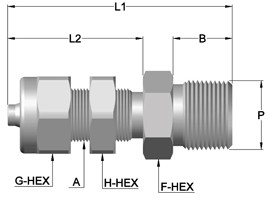
Fluid handling systems now carry higher expectations for safety, uptime and consistent output than the pipework of a decade ago. The pumps and instruments get the scrutiny, yet the joints between them decide whether a line stays sealed. Stainless steel push-on fittings answer that pressure directly, giving engineers a dependable connection at the point failures usually begin.
The overlooked weakness is the fitting itself, and corroded or slowly weeping joints are a common reason process lines lose pressure. Stainless steel push-on fittings address this by pairing a corrosion-resistant body with an internal gripping ring and seal that hold firm the moment a tube is pushed home. That step turns assembly into a leak-tight connection.
Connection Points Where Fluid Systems Quietly Lose Reliability
Joints Carry the Risk the Rest of the System Avoids: A push-on connection seats in seconds by hand, yet that same point stays the most exposed part of any line to pressure spikes, vibration and trapped moisture. Threaded and clamped joints loosen as they cycle, and once a seal face begins to weep, contamination and pressure loss spread across the wider circuit.
Small Leaks That Widen the Longer They Sit: Corrosion at a fitting rarely announces itself. In routine plant maintenance, engineers regularly trace major equipment damage back to a joint that had wept unnoticed for months. In carbon-steel assemblies, galvanic corrosion between dissimilar metals speeds that decay at the point they can least afford it, and the longer the leak sits, the fewer clean repair options remain.
Corrosion Resistance That Protects Long Service Intervals
A Surface That Repairs Its Own Defence: 316 stainless steel resists corrosion because a thin chromium oxide layer reforms across the surface whenever it is scratched or abraded. Stainless steel push-on-fittings carry that self-renewing barrier into wet, salt-laden and chemically active lines where brass or coated steel would pit. The result is a connection that holds its integrity across far longer service intervals.
Precision Machining That Removes the Guesswork: Consistent bore tolerances and a clean seat for the elastomeric seal let a push-on joint seal on the first attempt, not the third. Precision-machined stainless bodies hold the seal geometry that keeps compressed air lines tight at 6 to 8 bar, near 87 to 116 psi. Reliability starts on the machining floor, not at installation.
Push-On Designs Measured against Threaded and Clamped Joints
Where Threaded Fittings Cost More Than They Return: Threaded NPT and BSP joints seal well when cut and torqued correctly, yet each one adds sealant, tooling and installation time, and every disturbance risks galling the thread. Push-on connections remove those steps, seating by hand and releasing cleanly through a collar for rework. Threaded fittings still earn their place on permanent high-pressure runs.
Choosing between Grip Styles by Duty: Compression and clamped fittings hold firm under sustained load, though they need correct ferrule setting or band tension and slow every reconfiguration. Stainless steel push-on-fittings suit lines that engineers reconfigure often, where fast, tool-free changes cut downtime without giving up corrosion resistance. Matching grip style to how often a line is opened beats defaulting to one type.
Long-Term Value Engineered into Every Connection
Fewer Interventions across the Service Life: Durable stainless connections lower the total spend on a line because they cut leak call-outs, replacement parts and unplanned stoppages over years of service. Applied properly, lifecycle costing shows that a corrosion-resistant fitting specified once often outperforms a cheaper joint replaced repeatedly. Value at the connection is measured across the asset life, not at the purchase order.
Connections Ready for Tighter Performance Targets: As plants push for lower emissions, tighter leak limits and faster changeovers, the demands on every joint climb with them. Stainless push-on designs meet that shift by holding sealing integrity through pressure and thermal cycling while keeping assembly quick enough for modern maintenance schedules. The connection quietly keeps pace with the targets built around it.
What Engineers Weigh before Specifying Push-On Connections
Specification is a balance of pressure, media, cycle frequency and environment, and the right choice protects both uptime and budget. Stainless steel push-on-fittings tend to earn their place wherever corrosion, frequent reconfiguration or fast maintenance access drive the decision. The points below set out what usually separates a sound connection choice from a costly one.
- Corrosion-resistant stainless bodies hold up in humid, coastal and chemically active environments where coated steel corrodes early.
- Tool-free assembly shortens installation and rework, which lowers labour time on lines that are opened often.
- Clean sealing faces and tight tolerances give repeatable leak integrity across repeated connection and disconnection.
- Compressed air and instrument lines at moderate pressure gain fast, dependable joints without sealant or torque checks.
- Permanent, high-pressure runs may still favour threaded or compression joints where a fixed connection is the priority.
- Matching material grade and seal type to the media prevents early failure and repeated replacement costs.
Building Fluid Systems Ready for What Comes Next
Reliable, corrosion-resistant connections are what keep a fluid system predictable, protecting the uptime, safety and output that every plant is judged on. Leaving ageing threaded or coated joints in place only repeats the familiar cycle of weeping seals, emergency call-outs and lost production. Each postponed upgrade quietly adds to the running cost of the whole line.
The practical next step is a straightforward review of the connection points already carrying your most critical lines today. An assessment of pressure, media and cycle demands shows where corrosion-resistant push-on connections will pay back fastest. Speak with an instrumentation fittings specialist to evaluate your current joints and specify connections built to last.
