

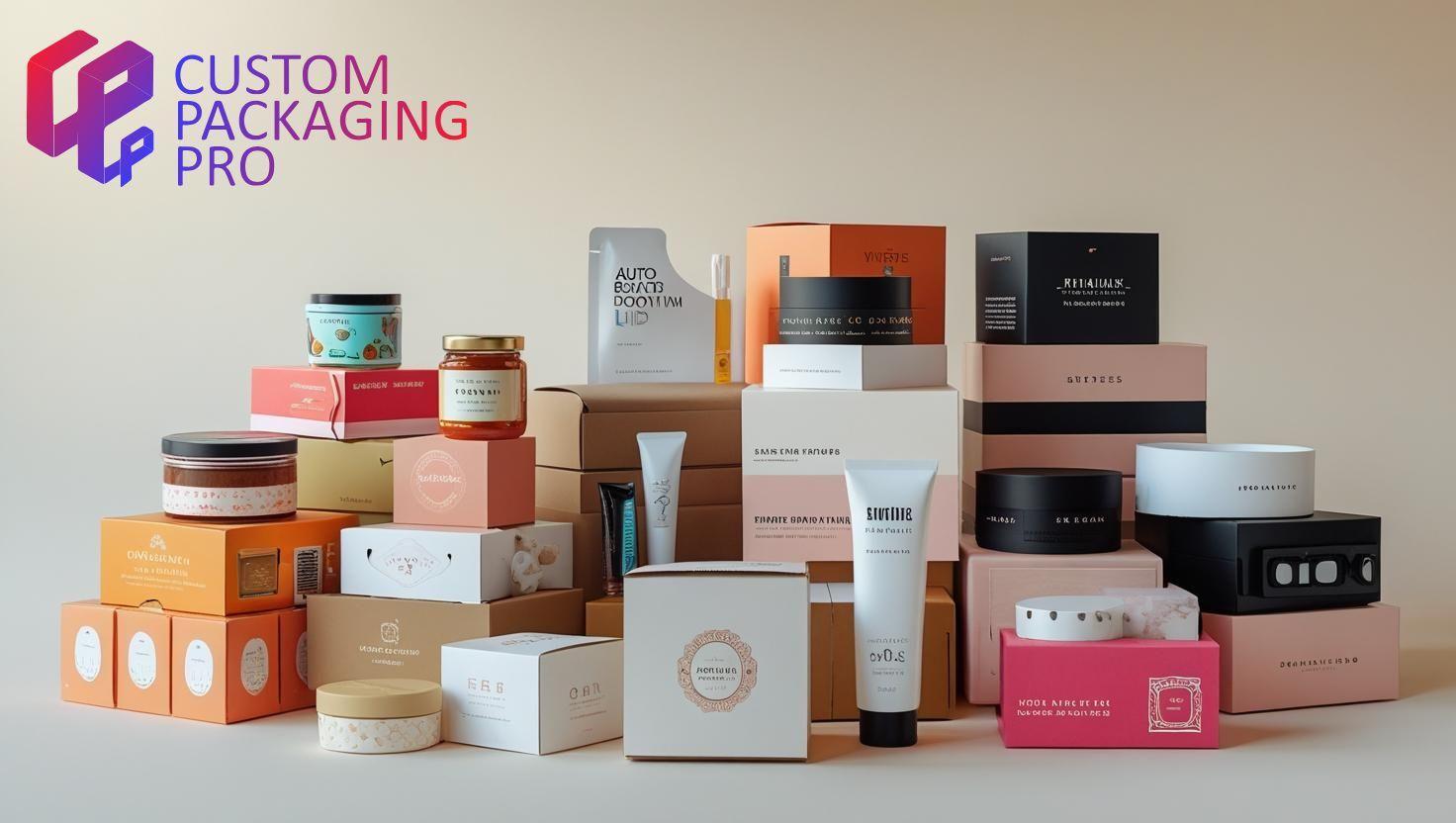
A product can look impressive in a design mockup yet struggle on a real shop shelf. The box may hide important information, the hanging tab might not fit the display fixture, or the packaging could be too bulky for the space allocated to it. These details affect how retailers stock products and how customers assess them.
Effective retail packaging must balance presentation, product protection, practical handling and clear communication. For independent UK brands, established retailers and ecommerce businesses entering physical stores, the right packaging structure can make products easier to display, identify and purchase.
Businesses developing retail packaging should consider where the product will be sold, how customers will interact with it and what information the pack must carry. A cosmetics carton, hanging accessory pack and shelf-ready display case all require different approaches.
Understanding the available materials, structures and printing options helps businesses make informed packaging decisions without introducing unnecessary complexity.
What Is Retail Packaging?
Retail packaging is the packaging used to contain, identify, protect and present products offered for sale to consumers.
It commonly includes printed cartons, product boxes, sleeves, bags, blister packs and other formats designed for retail environments.
The term can describe packaging used in physical shops as well as consumer-facing packaging supplied through online retailers.
Its purpose extends beyond appearance.
Retail packaging may need to display product information, accommodate barcodes, support shelf presentation and allow customers to handle the product appropriately.
The precise requirements depend on the product category.
A food carton, for example, has different regulatory considerations from packaging for stationery or fashion accessories.
The best retail packaging supports the product throughout its intended sales process.
Why Retail Packaging Design Matters
Retail packaging design influences how easily customers can recognise and understand a product.
A clear product name, readable information and consistent brand identity help shoppers compare items without unnecessary confusion.
Packaging dimensions also affect how products occupy retail space.
An oversized carton may reduce the number of units that fit on a shelf, while a poorly proportioned box can make the contents appear awkwardly presented.
The opening arrangement matters too.
Some products are intended to remain sealed until purchase, while others may be displayed in packaging that allows customers to inspect particular features.
Good design considers these practical requirements alongside colour, typography and decorative finishes.
Creative retail packaging should make the product easier to understand, not simply more visually elaborate.
Custom Retail Boxes and Their Main Styles
Custom retail boxes can be developed around different product sizes, shapes and presentation requirements.
Several structures are commonly considered.
Folding Cartons
Folding cartons are often used for cosmetics, small accessories, electronics and other relatively lightweight products.
They can incorporate different closure styles and printed panels.
Depending on the design, they may be supplied flat before assembly.
Tuck-End Boxes
Tuck-end cartons use flaps that fold into the box structure.
They can suit a variety of retail products where straightforward opening and closing are appropriate.
The selected closure should reflect product weight and handling requirements.
Sleeve Packaging
Printed sleeves can wrap around a product or an existing container.
They may provide additional branding space without requiring a completely new box structure.
However, the sleeve must fit securely and should not obscure essential product information.
Rigid Retail Boxes
Rigid boxes are frequently considered for premium products and gift presentations.
They offer a different appearance and opening experience from conventional folding cartons.
Their storage and production requirements should be considered before selection.
Retail Packaging Boxes for Different Product Categories
Retail packaging boxes are not interchangeable across every product category.
Cosmetics, jewellery, candles, stationery and electronic accessories each have different packaging needs.
A glass candle jar may require internal support, while a lightweight stationery item could suit a simple folding carton.
Products with irregular shapes may need inserts or specially designed internal arrangements.
For fragile items, the packaging should be assessed against expected handling conditions.
Businesses should measure the complete product, including caps, attachments and any primary packaging.
Internal dimensions are especially important.
A box that is too tight may damage the product or make packing difficult. Excessive empty space can create movement and an untidy presentation.
The appropriate structure begins with accurate measurements rather than a preferred exterior style.
Custom Retail Packaging and Brand Identity
Custom retail packaging allows businesses to coordinate product presentation with their visual identity.
Brand colours, logos, typography and graphics can be applied across a range of packaging formats.
Consistency is particularly useful when several products appear together on the same shelf.
For example, a skincare brand may use the same logo position and typography across different cartons while changing the colour or product name for each formulation.
This approach helps customers distinguish products without losing the overall brand identity.
For branded packaging, artwork must also account for the box structure.
Important information should not fall across creases, glue areas or closure flaps.
A design that looks balanced on a flat artwork file may require adjustments once the carton is assembled.
Structural design and graphic design should therefore be developed together.
Printed Retail Boxes and Finishing Options
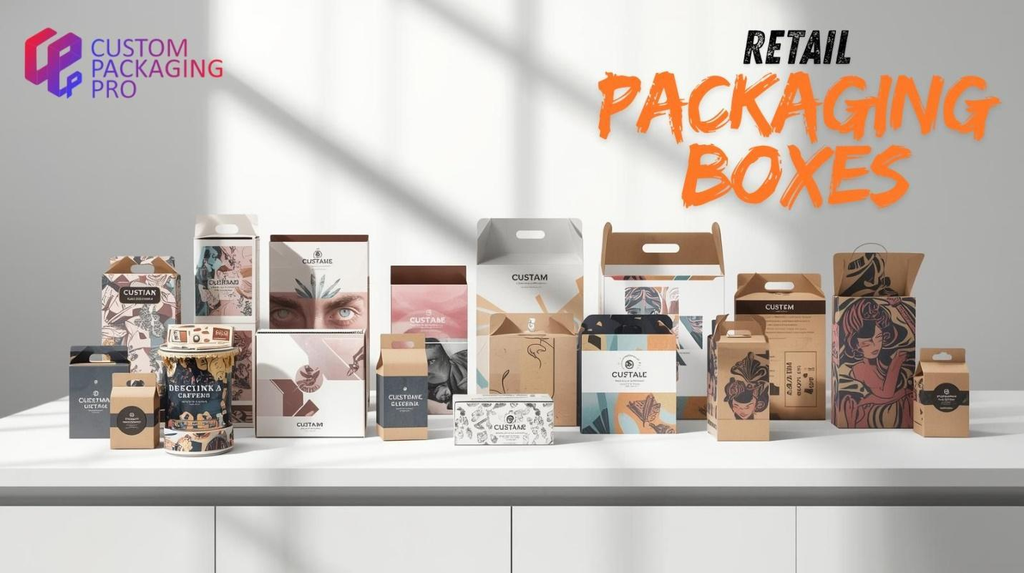
Printed retail packaging can use different techniques depending on the material, design and production method.
Full-colour printing is often considered for product imagery, decorative patterns and detailed brand graphics.
Other possible finishes include foil detailing, embossing, debossing and selective gloss treatments.
Their suitability depends on the selected substrate and construction.
For example, certain finishing effects may appear differently on coated paperboard and natural kraft surfaces.
Businesses should select treatments that support the intended design rather than adding decoration without a clear purpose.
Readability remains important.
Small product names, low-contrast text and excessive graphic detail can make packaging difficult to understand in a busy retail environment.
Where printed colours are important to brand consistency, appropriate samples can help assess the finished appearance.
Retail Display Packaging and Shelf Presentation
Retail display packaging is designed with the product’s presentation in mind.
Some products are placed directly on shelves, while others use hanging packs, display trays or countertop units.
The intended display method should be established before the packaging structure is finalised.
A hanging product may need a suitable header or suspension feature.
A shelf-standing carton should have dimensions and a base appropriate for its intended position.
For small accessories, header cards for retail packaging may provide space for branding and product information.
However, a header card must be suitable for the attached product and display arrangement.
Retailers should also consider how products are replenished.
Packaging that looks attractive individually may be inconvenient if staff cannot stock or organise it efficiently.
Retail Ready Packaging: What Does RRP Mean?
Retail ready packaging, often abbreviated to RRP, refers to packaging designed to support efficient handling and presentation in retail environments.
It is commonly associated with outer packaging that can be opened or converted into a display-ready format.
For example, a shipping case may be designed so that part of it can be removed, leaving products arranged in a tray for shelf placement.
The exact requirements depend on the retailer and product category.
Retail ready packaging may need to support transport, identification, opening and display.
It should not be confused with an individual printed.
A product can have its own consumer-facing box while several units are supplied in a separate retail-ready outer case.
Businesses supplying larger retailers should confirm the relevant packaging specifications before production.
Retail Blister Packaging and Clamshell Formats
Retail blister packaging commonly combines a formed plastic component with a backing card or another supporting structure.
It can allow customers to view the product while keeping it contained.
This format is often associated with small accessories, hardware and selected consumer goods.
Retail clamshell packaging generally uses formed sections that close around the product.
These formats can provide different display and handling characteristics from conventional cartons.
However, they also introduce material and disposal considerations.
Businesses should assess whether the product genuinely requires a transparent formed pack.
A paperboard carton with an appropriate window may be an alternative in some applications, although it will not offer identical characteristics.
The decision should reflect product visibility, protection and retail requirements.
Retail Food Packaging and Material Suitability
Retail food packaging has requirements that extend beyond graphic presentation.
The selected material must suit the food and intended contact conditions.
Dry confectionery, packaged tea, bakery products and chilled foods may require different packaging arrangements.
A printed paperboard carton may provide an outer presentation layer around a suitable primary food container.
However, that does not automatically make the printed carton appropriate for direct food contact.
Businesses should consider the food type, contact duration, storage conditions and any relevant barriers or coatings.
Product information and labelling requirements must also be addressed according to the applicable rules.
For food products, packaging design should be developed alongside material suitability and compliance considerations.
Retail Packaging Bags and Complementary Supplies
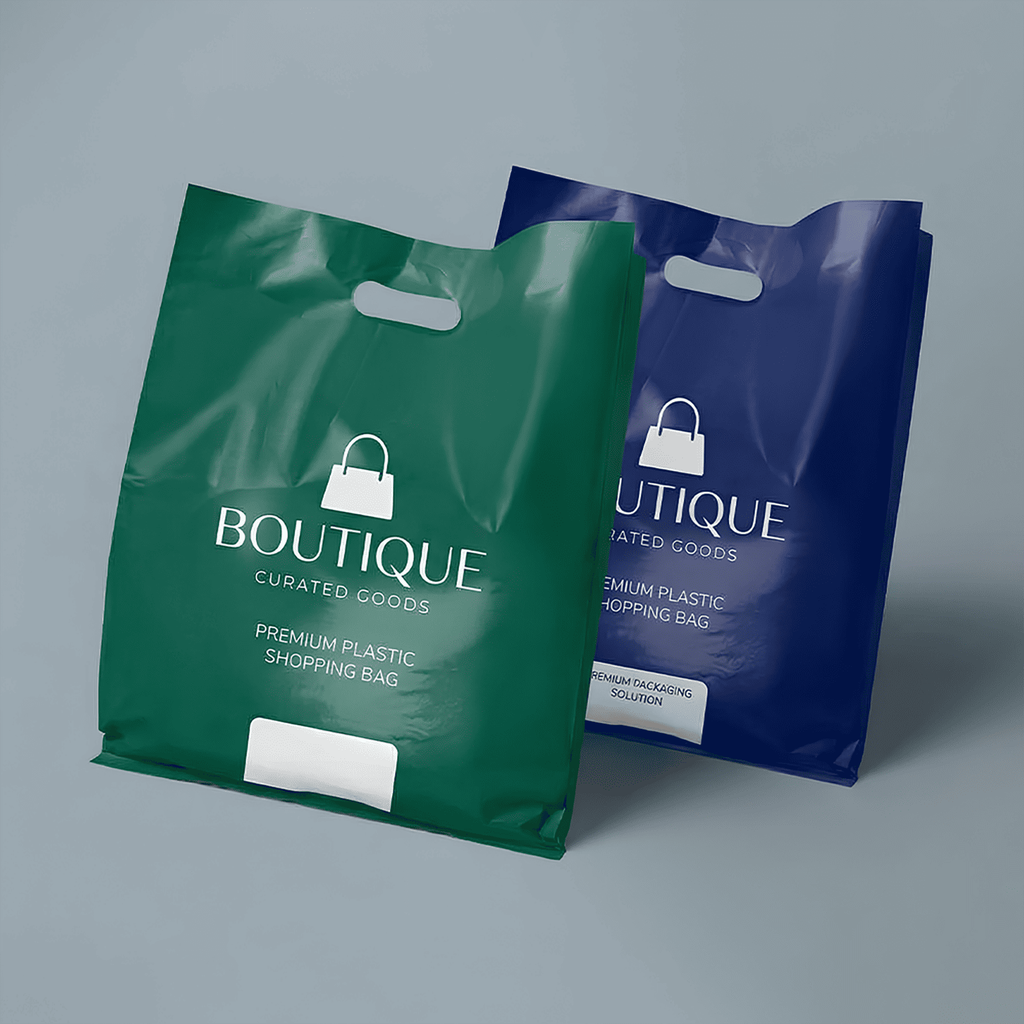
Retail packaging bags can extend a brand’s presentation beyond the individual product box.
Paper bags, suitable plastic bags and other carrying formats may be used depending on the product and retail setting.
The bag should accommodate the purchase without unnecessary strain or excessive empty space.
Businesses should also consider handles, closure arrangements and intended carrying conditions.
Other retail packaging supplies may include tissue, labels, wrapping paper and protective inserts.
These components can create a coordinated appearance when used appropriately.
However, every additional item introduces material and packing considerations.
A simple printed bag and correctly sized product carton may provide a more practical solution than several decorative layers.
Retail Packaging for Small Businesses
For a small business, retail packaging needs to be manageable as well as attractive.
New product ranges may benefit from standardising box dimensions where products have compatible shapes and handling requirements.
This can simplify ordering and stock organisation.
However, using one box size for unrelated products can create poor fit and unnecessary empty space.
Businesses can also consider different levels of customisation.
A fully printed carton may be appropriate for an established product range, while a suitable label or printed sleeve may provide flexibility for products with frequently changing artwork.
The right approach depends on the brand’s requirements and packing process.
Packaging decisions should support the business’s current operations without making future product development unnecessarily difficult.
Retail Packaging and Ecommerce Shipping
Retail packaging and shipping packaging perform different functions.
A printed product carton is generally designed around consumer presentation and product information.
A shipping carton must accommodate the handling conditions associated with distribution.
For ecommerce orders, the retail box may need additional protective packaging.
Corrugated mailer boxes, postal boxes and suitable internal cushioning can form part of that arrangement.
The necessary protection depends on product fragility, weight and expected transport conditions.
Businesses should not assume that a decorative retail carton will withstand courier handling on its own.
Where products are sold both online and in shops, the packaging system should account for both channels.
A consistent retail carton can be retained while the outer shipping arrangement changes according to distribution requirements.
Retail Packaging and Environmental Considerations
Environmental claims should be based on the actual packaging specification.
Paperboard, corrugated board, plastic and other materials have different characteristics and disposal considerations.
A box’s appearance does not establish whether it is recyclable, biodegradable or environmentally preferable.
Coatings, windows, laminations and mixed-material components can affect recycling options.
Businesses should request relevant material information before making environmental claims.
Reducing unnecessary packaging dimensions and avoiding redundant components may also be useful considerations.
For product packaging, the goal should be to use materials and structures appropriate to the product while making accurate statements about their characteristics.
Choosing Retail Packaging Suppliers in the UK
When comparing retail packaging suppliers, businesses should begin with a clear specification.
Provide product dimensions, approximate packed weight, intended display method, artwork and expected order quantity.
Explain whether the packaging is for physical shops, ecommerce sales or both.
Custom Packaging Pro UK provides custom packaging and printing solutions for businesses seeking product-specific packaging formats, including retail boxes.
When evaluating suppliers, consider the proposed material, box structure and printing requirements.
For products requiring particular labelling, food-contact suitability or protective performance, these matters should be addressed before production approval.
Physical samples can help assess assembly, product fit and printed appearance.
A detailed brief makes it easier to compare quotations against equivalent specifications.
Final Thoughts
Effective retail packaging should make products easy to identify, attractive to present and practical to handle.
Folding cartons, rigid boxes, sleeves, hanging packs and retail-ready cases each serve different purposes. Their suitability depends on the product, display environment and distribution method.
Branding and decorative finishes can strengthen presentation, but they should not compromise product information, packaging fit or usability.
For businesses developing bespoke packaging solutions, the strongest approach is to establish the product’s requirements and retail environment before selecting the final structure and artwork.
Well-planned retail packaging supports both the customer’s purchasing experience and the retailer’s everyday operations.
FAQs
What is retail packaging?
Retail packaging is the packaging used to contain, identify, protect and present products for sale to consumers. It may include printed cartons, rigid boxes, sleeves, bags and other consumer-facing formats.
What does “retail packaging” mean?
The term refers to packaging intended for products sold through retail channels. It usually includes branding, product identification and other information relevant to the customer, although the exact requirements vary by product category.
What are the different types of retail packaging?
Common types include folding cartons, rigid boxes, blister packs, clamshell packaging, printed sleeves, hanging packs and retail-ready display cases. Each has different presentation and handling characteristics.
What are the four types of packaging?
One common functional classification includes primary packaging, secondary packaging, tertiary packaging and transport-related or distribution packaging. Terminology varies, and transport packaging often overlaps with tertiary packaging.
What are the 5 P’s of packaging?
There is no universally standardised set of five P’s specifically for packaging. In practical packaging planning, five useful considerations are protection, presentation, product information, practicality and price.
What are 10 packaging materials?
Examples include paper, paperboard, corrugated fibreboard, glass, aluminium, steel, polyethylene, polypropylene, polyethylene terephthalate (PET) and wood. Their suitability depends on the product and intended packaging application.