

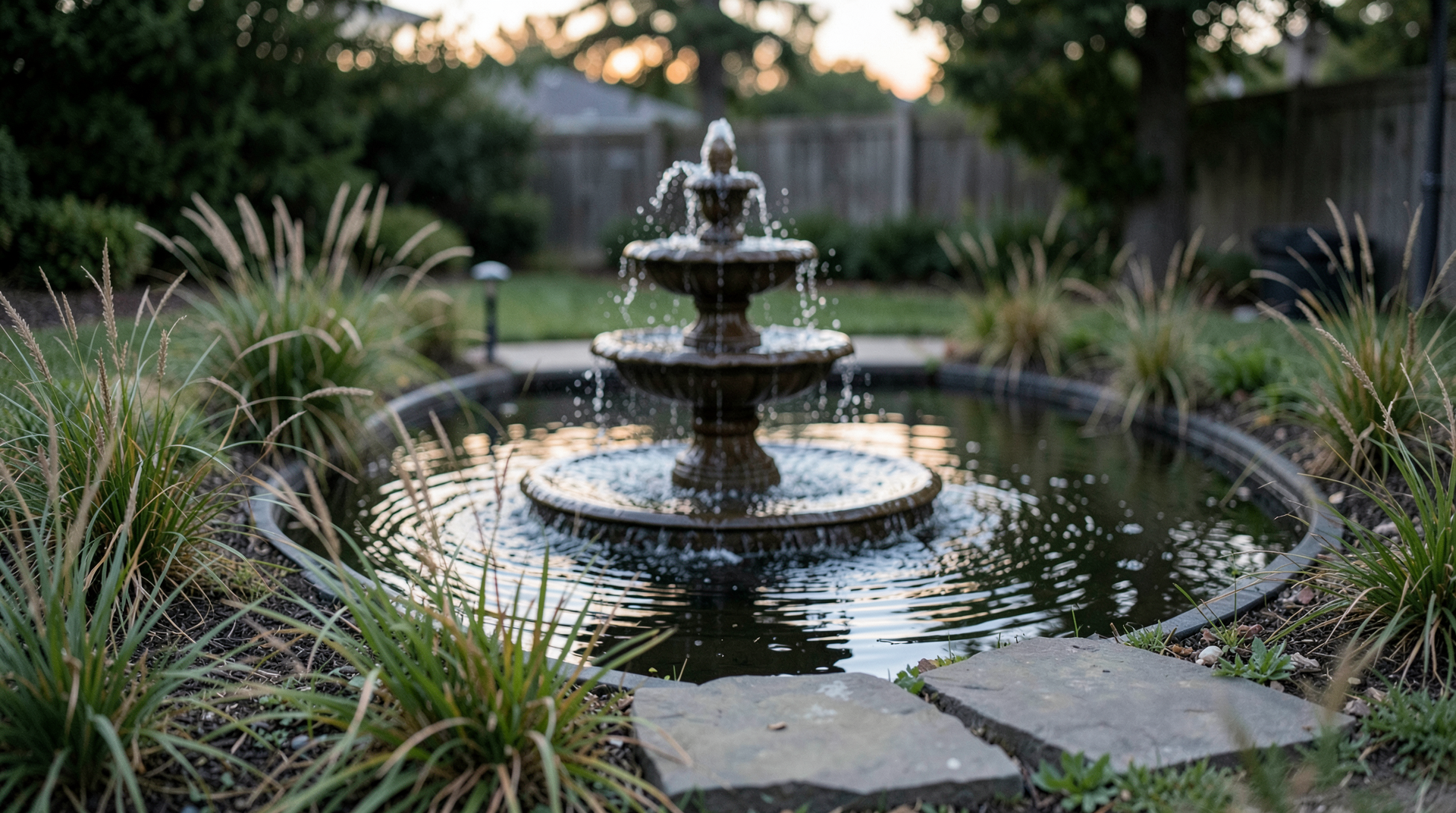
A tall fountain can look dramatic in a catalog photo and still be wrong for the pond behind a house or beside a shared patio. If spray reaches seating, disappears against a busy backdrop, or overwhelms the water surface, the trouble usually started before anyone considered the site.
Pump capacity and pond care may already be settled. Spray pattern is a separate choice about what people see from the pond edge, and browsing large pond fountains online can help you compare overall forms once you know what the property needs.
Why Spray Shape Comes Last
A pattern needs a purpose before it needs a look. It might mark the center of a broad pond, pull attention away from a service area, or give people at a clubhouse window a clearer view of the water. Without that purpose, a fountain can seem stranded in open water.
A low, contained display often suits a pond viewed from nearby benches or a garden path. A more visible vertical display may suit a larger open setting, provided it has enough room around it. The viewing distance matters as much as the fountain itself.
Choosing a spray from a photo first tends to reverse the decision. The better order is to study the pond and its surroundings, decide how the feature should read from the main viewpoints, then narrow the pattern to fit those conditions.
Site Before Spray
Start with an inventory of the pond edge, drainage routes, existing planting, paved areas, and the places where people actually stop to look at the water. Site inventory and analysis should happen before a focal feature is placed, rather than after a fountain style has already won the argument.
Watch the pond from the patio, driveway, main windows, and any walkway that faces it. Sun, wind, humidity, and rainfall affect both planting and the comfort of people using the space. Afternoon glare can flatten a spray against the water, while a steady breeze can carry mist toward a door or dining area.
Existing trees need the same close attention. Planting can frame a fountain well, but dense branches can block the view that justified the feature in the first place. Keep a clear sightline from the place where the fountain is meant to be enjoyed.
Style and Focal Points
The pond and its setting should point toward a style direction. A formal property with straight paths, clipped hedges, and strong geometry often suits an orderly water display. A pond edged with irregular stone and loose planting may call for a quieter effect that supports the setting rather than competing with it.
Think of the fountain as a focal point, a feature that gives the eye somewhere to settle. It shouldn’t compete with the house, a specimen tree, or a prominent entrance. If the pond sits beyond the main gathering area, the display may need enough presence to register from farther away while still looking proportionate from the shore.
Placement follows the same logic. A centered fountain can reinforce symmetry in a formal setting, while an off-center location may make more sense when the strongest view comes from one side. The pond doesn’t need to look identical from every angle, but its intended viewing angle should be clear.
Wind and Splash Space
Height and width change the practical demands of a fountain. A taller display puts water farther into moving air, while a wider display sends water across more of the pond surface. Both need open water around them, particularly near paving, furniture, planted beds, or a narrow pond edge.
Treat the splash zone as part of the design area, not leftover space. The useful question isn’t whether the fountain looks good in one calm-day photo. Ask where the water may land when the wind shifts and whether that surface can handle regular moisture.
Check these conditions before settling on a pattern:
- The usual wind direction across the pond and nearby seating
- The open water between the fountain and the pond edge
- Walls, trees, or grade changes that shelter one side
- The view from close range and from the farthest intended viewpoint
A crowded basin makes the choice harder. Marginal planting, stone shelves, and shallow edges can make a broad pattern feel cramped even when the pond appears large on paper. Leave room for the display to fall back into open water rather than onto the border.
Pond Care Boundaries
Spray selection deals with appearance, placement, and how the fountain fits the property. It doesn’t replace the ongoing work of watching pond conditions, including water quality and debris. Penn State’s pond management guidance treats water quality as an important part of pond care, separate from choosing how a fountain should look.
That distinction helps when you speak with an installer or supplier. Describe the view you want, the areas that must stay dry, and the exposure around the pond. Then discuss maintenance as its own part of the plan.
A fountain can make a pond more noticeable, but it can’t solve glare, overgrown planting, or a poor viewing angle by itself. If the feature is hard to see from the places that matter, changing the spray may not fix the problem.
Before You Choose
Begin with the spaces around the pond rather than a preferred fountain image. Notice where people sit, which windows face the water, where wind crosses the surface, and how planting frames or blocks the view. Those observations will show whether the pond needs a contained display, a more visible feature, or a quieter treatment.
Choose the style direction after that, then give the spray enough open water and shelter for the setting. A pattern that suits the pond’s scale, sightlines, and exposure will read better than one chosen for height alone. Walk the site at different times of day and in wind before settling on a spray style.
