

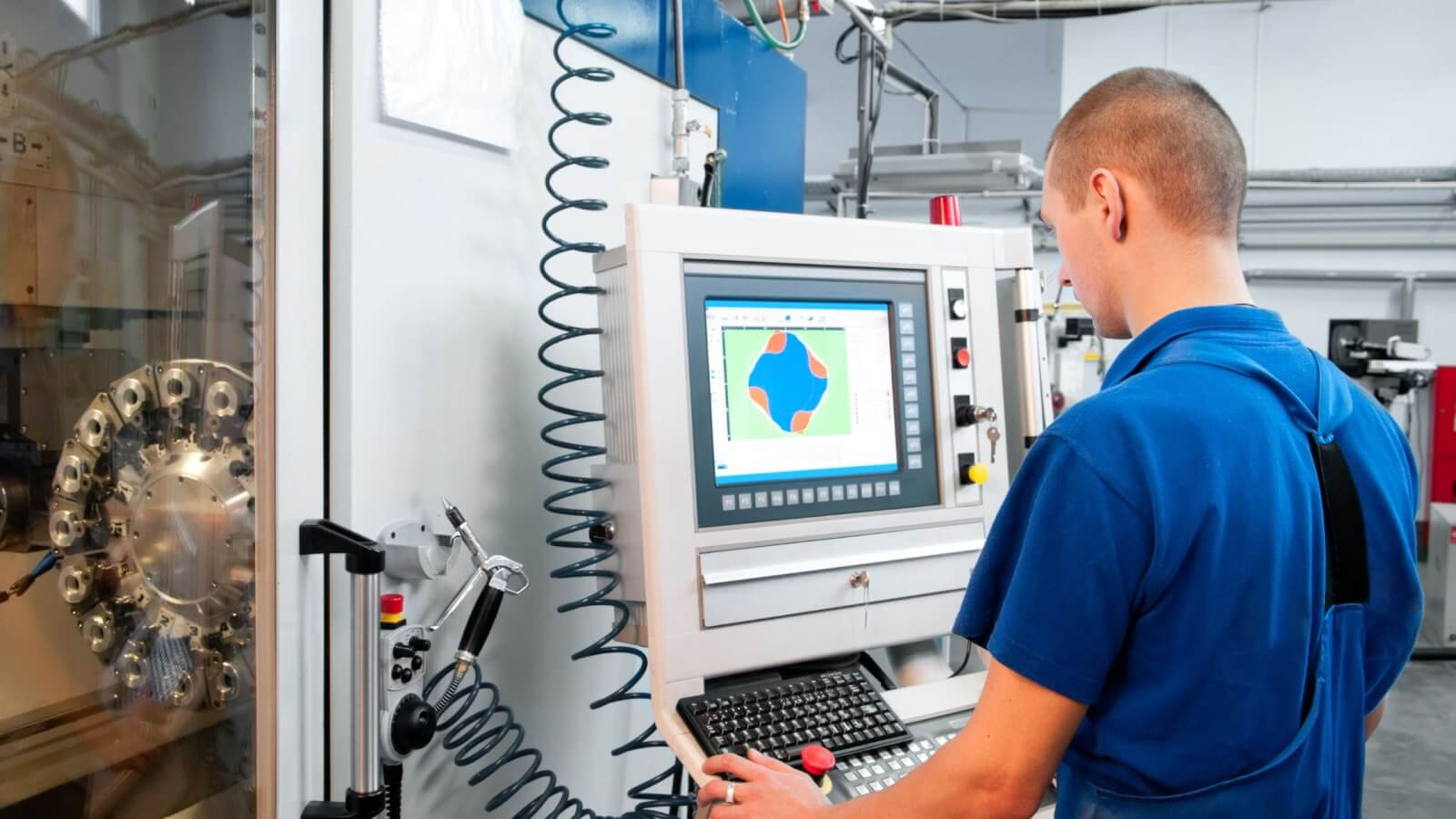
Advanced product development is often described as a journey from idea to market. In reality, it is a series of decisions about materials, tolerances, geometry, and manufacturing processes—each of which determines whether a concept becomes a reliable product or remains an expensive lesson. CNC machining sits at the center of that journey. It is not simply a way to make parts. It is the physical bridge between design intent and commercial reality.
Prototyping as an Iterative Discipline
The days of linear product development—design, prototype, test, revise, repeat—are fading. Modern engineering teams iterate continuously. They test assumptions early, refine designs based on real data, and validate performance under conditions that simulation alone cannot capture. This approach reduces risk and shortens time to market, but it places intense demands on manufacturing partners.
CNC machining is uniquely suited to iterative development. Unlike processes that require dedicated tooling or lengthy setup, CNC machines can produce functional prototypes directly from digital designs with minimal lead time. Design changes are made through programming adjustments, not physical retooling. This flexibility allows teams to explore multiple variations, test different materials, and validate performance without committing to production tooling.
For components with complex geometries or tight tolerances, multi-axis CNC machining offers additional advantages. Features that would require multiple setups on a three-axis machine can often be produced in a single operation. This preserves datum alignment and eliminates the tolerance stack-ups that accumulate when parts move between machines. The prototype that emerges is functionally representative of the eventual production part, giving engineers confidence that test results will translate to the factory floor.
Tolerance Management: Where Cost and Performance Meet
Tolerance specification is one of the most consequential decisions in product development, and one of the most frequently misunderstood. Tolerances define acceptable variation around nominal dimensions. They determine whether parts fit together, whether moving assemblies operate smoothly, and whether products perform reliably over time. They also drive cost.
Tighter tolerances are not inherently better. They require slower cutting speeds, additional machining passes, specialized tooling, and more frequent inspection. They increase scrap rates because accumulated variation consumes more of the available tolerance band. And they extend lead times by adding operations that may not be necessary for the part to function. The most effective engineering teams specify tolerances based on function, not habit.
Aluminum offers a useful case study. Its lower cutting forces and reduced distortion risk compared to harder materials allow relatively tight tolerances to be achieved. The practical range often extends to ±0.01 to ±0.05 mm, and tighter tolerances are feasible when the application demands them. But the key phrase is “when the application demands them.” Over-specification is a hidden cost driver that compounds across every part in an assembly.
Standard tolerance frameworks provide a shared language between designers and manufacturers. ISO 2768 establishes baseline ranges for general dimensions and critical features. For applications requiring finer control, geometric dimensioning and tolerancing provides a more precise method for specifying form, orientation, location, and runout. Understanding these frameworks—and knowing when to apply them—is essential for cost-effective product development. A practical reference on aluminum machining tolerances can help engineering teams make informed decisions without over-constraining production.
Material Behaviour and the Prototype-to-Production Gap
The materials used during prototyping determine whether test results translate to production reality. A prototype made from a substitute material may pass every test and still fail when the production material is introduced. For this reason, production-grade materials should be used from the earliest stages whenever possible.
Aluminum is a frequent choice for advanced product development. Its strength-to-weight ratio, thermal conductivity, and corrosion resistance make it suitable for applications ranging from lightweight structural components to heat management systems. But different aluminum alloys behave differently under cutting forces. The 6061 alloy is versatile and forgiving. The 7075 alloy offers higher strength at the cost of tighter machining windows and more rapid tool wear. The 2024 alloy provides excellent fatigue resistance but demands careful chip management.
A manufacturing partner with deep experience in aluminum precision CNC machining can advise on alloy selection, tooling strategy, and cutting parameters before the first chip is cut. This front-end collaboration prevents the costly redesigns that occur when production realities collide with design assumptions.
From Prototype to Production: The Continuity Advantage
The transition from prototype to full-scale production is where many manufacturing relationships fail. A shop that produces a perfect first article may struggle when orders scale to tens of thousands of units. Processes that worked at low volume may not hold tolerances when cycle times compress and tool wear accelerates.
Integrated manufacturers eliminate this discontinuity by applying the same process discipline at every stage. They document tooling strategies, cutting parameters, and inspection protocols. They use in-process probing to verify dimensions between cycles and compensate for tool wear before parts drift out of specification. They track statistical process control data across production runs, identifying trends before they produce non-conforming parts.
This continuity is particularly valuable for aluminum components. The transition from prototype to production often involves changes in machining strategy—different workholding, different tool paths, different cycle times. A partner who has documented the process at low volume can scale it predictably rather than starting from scratch.
Digital Tools and the Evolving Toolbox
The CNC machining landscape is changing rapidly. Artificial intelligence is being deployed for process parameter optimization and adaptive control. Digital twin technology allows engineers to simulate machining operations before the first chip is cut. Five-axis machines with rotational tool center point capability produce complex geometries with unprecedented accuracy. These advances expand what is possible in product development.
For engineering teams, the implication is that the boundaries of manufacturability are shifting. Features that once required assembly from multiple components can now be machined as a single part. Geometries that were considered too complex for traditional machining can be produced reliably. Tolerances that were once theoretical can now be held consistently in production.
Choosing a Partner for Advanced Development
The choice of manufacturing partner has direct implications for cost, quality, and speed to market. The lowest quoted price is rarely the lowest total cost when component quality or delivery reliability suffers. Instead, engineering leaders should evaluate potential partners on several fronts.
Equipment matters: multi-axis CNC machining centers with live tooling, automated bar feeders, and in-process probing are now the baseline for serious work. Material experience matters: a shop that has produced thousands of aluminum components across different alloys understands the subtle behaviors that separate reliable production from costly scrap. Quality infrastructure matters: certifications, traceability systems, and documented processes provide the audit trail that regulated industries require.
Communication and responsiveness matter as much as technical capability. The best manufacturing relationships are characterized by transparency about challenges, collaborative problem-solving when issues arise, and regular communication about schedules and priorities. Technology enables precision; people enable partnership.
Looking Ahead
Advanced product development will continue to push the boundaries of what is possible. Smaller components, tighter tolerances, more complex geometries, and more demanding materials will define the next generation of products. Meeting these demands will require manufacturing partners who combine advanced equipment, documented processes, and skilled workforces.
CNC machining is not a commodity. It is a strategic capability that determines whether products perform as designed, whether supply chains remain resilient, and whether companies can compete in an increasingly demanding global market. In an era where every component matters, the ability to source high-quality machined parts from a reliable partner is not optional. It is the foundation of lasting competitive advantage.
