

When you open a trading terminal, the stream of live quotes flashing across your watchlists can look like a singular, unified price index. Developing traders often assume that everyone in the foreign exchange market interacts with the exact same transactional parameters simultaneously. The reality of retail execution depends heavily on the behind-the-scenes digital pipelines your intermediary uses to source order book volume. Securing an environment backed directly by top-tier banking infrastructure is the most decisive factor in optimizing your transaction efficiency over a long sample size.
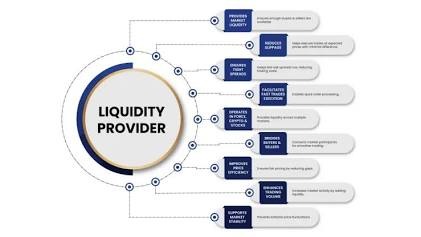
Structural functions and advantages delivered by core institutional capital pools. Source: GTCFX
What does “Tier-1 liquidity” actually mean when I see it in broker manuals?
The foreign exchange market does not operate on a centralized structural floor; it runs as a vast network of interconnected financial tiers. At the absolute top of this digital ecosystem sit Tier-1 liquidity providers, which consist of the world’s largest investment banks, including Citibank, JPMorgan Chase, UBS, and Deutsche Bank.
These massive institutions handle the main core of international trade flows, global corporate clearing, and multi-billion dollar investment funds. When a broker states they utilize Tier-1 pools, it means they bypass secondary retail middlemen entirely. They route your individual position commands straight into the deepest, most secure capital networks on earth. Forcing micro-lot entries through these premium banking lines provides institutional transparency that remains completely unperturbed by localized retail dealer manipulations.
How does this institutional backing alter the bid-ask spreads on my screen?
The immediate visual benefit of deep institutional backing shows up directly in the narrowness of your active price channels. Every asset features a split layout: the bid price, which is the maximum a buyer will pay to absorb a contract, and the ask price, which is the minimum a seller demands to let it go.
The space between these limits forms the spread, which behaves exactly like an entrance toll or fixed administrative service charge paid simply to cross onto the playing field. When you trade inside an account configuration provided by reputable low spread forex brokers, your platform aggregates feeds from dozens of these megabanks simultaneously. Because these global institutions are actively competing against one another in real time to capture your order flow, they compress their retail markups, pushing the visual spread down to bare-minimum fractions of a pip.
Why do some providers display wide, sluggish quotes during session open?
If your platform terminal relies on only a handful of minor secondary clearers, your data feed is completely vulnerable to localized volume drops. When the global market transitions between trading days, institutional activity naturally declines for a brief window, leaving order books thin.
A basic retail broker will expand their spreads defensively during these intervals to protect their corporate balance sheets from pricing gaps. High-performance networks avoid this massive inflation by leaning on a diverse array of connected tier-one desks concurrently. Even if a few massive banks temporarily pause their algorithmic quoting lines to run midnight updates, the remaining connected institutions step in to fill the structural void, keeping the bid-ask matrix remarkably stable on your workstation monitor.
How does deep bank volume protect my trades from execution slippage?
Slippage represents the physical difference between the target price you click on your charting app and the actual transaction rate recorded on your ledger logs. It typically occurs when your position volume outweighs the immediate liquidity resting at the top layer of the order ledger.
If the top price tier can only absorb two lots and you submit a heavy ten-lot order, your platform has to travel across deeper, more expensive pricing columns to complete your request. Gaining a practical grasp of what is a spread in trading across changing volume depths helps you understand this mechanical risk completely. Tier-1 backing ensures that every decimal column is packed with massive institutional limit orders. This immense depth allows heavy multi-lot trades to clear the ledger instantly without triggering severe execution drag or unexpected entry distortions.
Can choosing advanced frontend software maximize this institutional pipeline?
All the tier-one bank connections and price aggregation networks mean very little if your localized terminal infrastructure chokes under rapid data updates. A slow, outdated retail app will create an internal processing bottleneck, showing you stale historical snapshots instead of real-time server quotes.
Sourcing an enterprise-grade terminal interface, such as the best forex broker for mt5, ensures your frontend matches the velocity of institutional matching engines. Advanced platform setups feature optimized multi-threaded architectures that process thousands of incoming fractional pip updates every second effortlessly. This hardware compatibility ensures your technical indicators, risk parameters, and automated scripts interact directly with unfiltered global liquidity lines, allowing you to click entries precisely where your strategy dictates.
Practical Action Plan
Stop evaluating brokers based on superficial marketing bonuses or visually loud dashboard graphics. Treat your technical framework like a serious business enterprise, pull up your performance statement history from the past ninety days, and check your average fill latency in milliseconds. By moving your active portfolio away from delayed, retail-markup accounts and restricting your high-volume execution exclusively to peak session crossovers when tier-one competition is at its absolute densest, you can naturally insulate your margin from unnecessary transactional drag and run your trading with real operational control.
