

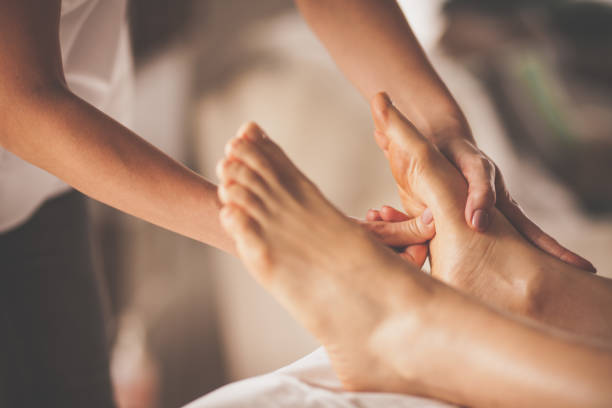
Most people treat relaxation like a checklist that needs to be ticked one by one. Shoulders loosened, neck sorted, back worked through. And yet something still feels off even after a full session. That nagging tension doesn’t always live where you’d expect it to. Often it starts from the ground up, and your feet may be the reason the rest of your body refuses to fully let go.
A foot massage does more than ease soreness in your soles. The feet contain over 7,000 nerve endings, and when those nerves are stimulated the right way, the signal travels upward through your entire nervous system. That’s why people often feel a shift in their shoulders or chest after targeted foot work. It’s not a coincidence. It’s the anatomy responding in exactly the way it was designed to.
The Body Holds More Than You Realize
Where Hidden Tension Actually Lives: Most massage routines target obvious muscle groups because that’s where clients report discomfort. The feet, though, tend to be an afterthought. They carry your full body weight all day, absorb impact with every step, and rarely receive the dedicated attention they need. Skipping them is like trying to fix a building’s structure without ever checking the foundation.
The Plantar Fascia Connection: The plantar fascia is the thick band of connective tissue running along the bottom of the foot, and it connects directly to the calf muscles, hamstrings, and lower back. When it tightens, the effects ripple upward through the body. That’s why unexplained lower back discomfort sometimes traces back to the feet, and why releasing that tissue can ease tension in places that seem completely unrelated.
Pressure Points and the Path to Whole-Body Calm
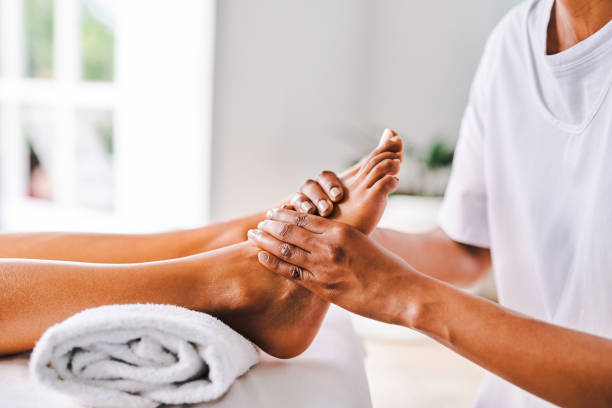
How Reflexology Maps the Body: Reflexology is built on the idea that specific zones on the feet correspond to organs, glands, and body systems throughout your frame. Applying targeted pressure to these zones doesn’t just feel good locally. It sends signals through nerve pathways that influence how tension is distributed across the body. The research behind this practice continues to grow, and the results are hard to dismiss.
What the Research Actually Shows: Studies on reflexology have noted reductions in anxiety, improvements in sleep quality, and measurable changes in pain perception following consistent sessions. These outcomes aren’t reserved for people with chronic conditions. Even someone carrying everyday work-related stress can feel a genuine shift in overall calm after targeted foot therapy. The response tends to be faster than most people expect, which is part of why it surprises them.
Signs Your Feet Are Holding You Back from Real Rest
The Signals Worth Paying Attention To: You might not connect your foot health to your relaxation level, but your body already does. A few patterns come up consistently when the feet are ignored:
- Persistent lower back tightness that won’t respond to back-focused massage, which may trace to unresolved tension in the foot’s arch.
- Difficulty falling asleep even after a full-body massage session, often tied to lingering nerve tension in the feet.
- A general sense of restlessness in the legs or a feeling that the body hasn’t fully settled after treatment.
- Recurring headaches or jaw tension that may ease once foot-based pressure point work is added to a regular routine.
Why This Pattern Repeats: The feet are among the most worked and least rested parts of the body. They take more steps, absorb more pressure, and receive far less therapeutic care than the muscles most people focus on. When that imbalance builds over time, relaxation hits a ceiling. The body struggles to reach a deeper state of calm when the tension at its base stays unaddressed.
Foot Therapy Changes the Way the Whole Body Responds
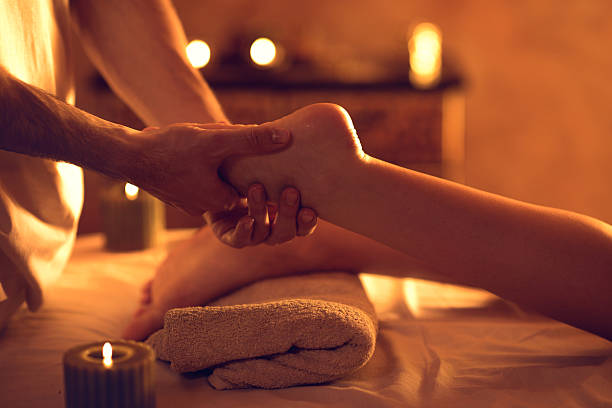
The Parasympathetic Response Explained: Stimulating the feet in a deliberate, rhythmic way activates the parasympathetic nervous system, the part of the nervous system responsible for the body’s rest-and-digest state. Heart rate slows, breathing deepens, and cortisol levels begin to fall. This is the same physiological state that makes deep sleep possible, and foot therapy is one of the more reliable ways to reach it without medication or extensive preparation.
Why the Effects Last Longer: The reason foot-focused sessions feel different from standard massages isn’t just about technique. It’s about which systems get engaged. When the nervous system is calmed at a root level, the relaxation response extends well beyond the session itself. People often report sleeping better that night, feeling less reactive the following day, and noticing that tension from other areas resolves faster.
The Rest Your Body Has Been Waiting For
Your feet don’t ask for much. But when they finally get the attention they deserve, the shift moves through your whole system. Relaxation that once felt just out of reach starts to come naturally. If you’ve been working through tension without the results you want, it may be time to start from the ground up. Book a foot therapy session today and feel the difference a strong foundation makes.
