

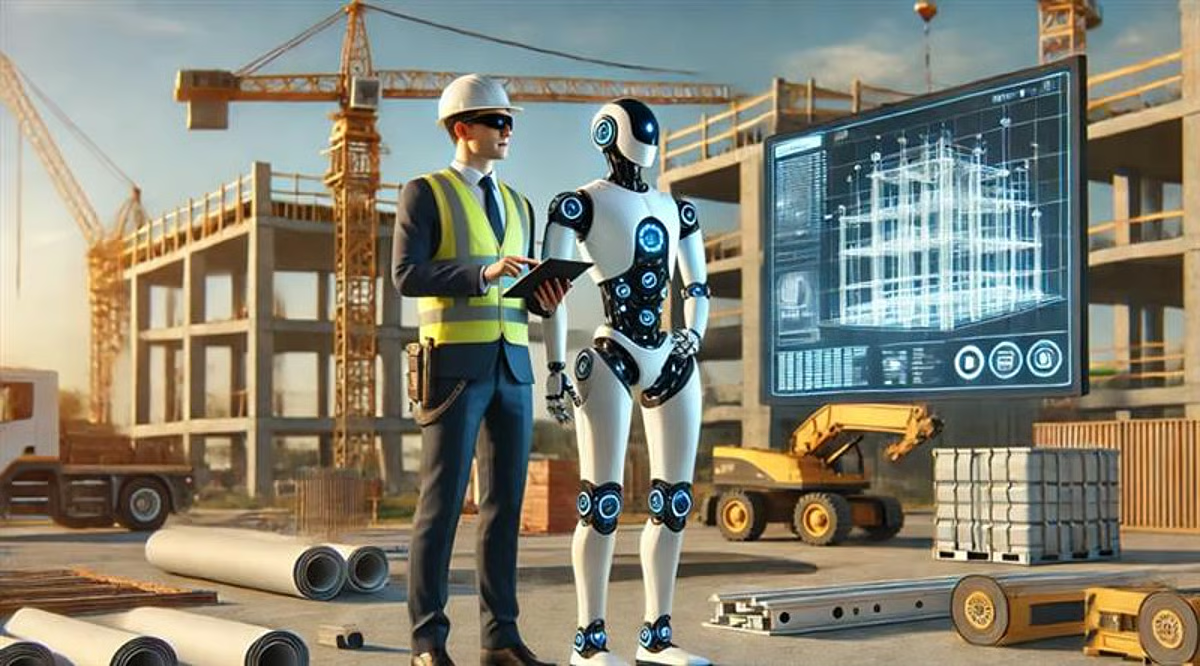
In the construction industry, accurate cost estimating is essential for winning bids, controlling budgets, and ensuring profitability. Traditionally, this process has been manual, time‑consuming, and prone to human error. Today, however, artificial intelligence (AI) is dramatically changing the way construction estimating is done — and the best part is that many tools are now available for free.
This article explores the world of free AI for construction estimating — what it is, how it works, the best tools available, benefits, limitations, real‑world applications, FAQs, and how construction professionals can get the most out of these new technologies.
What Is AI Construction Estimating?
AI construction estimating refers to software systems that use artificial intelligence, machine learning, and automation to generate cost estimates for construction projects. Instead of manually measuring quantities, entering pricing, and calculating totals, AI tools use data, pattern recognition, and sometimes computer vision (for reading plans or photos) to produce estimates significantly faster and more accurately.
Traditionally, estimators would spend hours or even days working on takeoffs and pricing. With AI, much of that heavy lifting can be automated — allowing teams to focus on strategic decision‑making instead of repetitive calculations.
Free AI estimating tools provide basic or scaled‑down access to these capabilities without the upfront cost of professional estimating systems. This makes them especially valuable for small contractors, freelancers, and startups.
How AI Construction Estimating Works
1. Data Input
Estimating AI systems need some form of input. This may include:
- Building plans or blueprints (PDF or image file)
- Job descriptions or scope of work
- Photos of a job site
- Standard unit cost lists
Some tools accept text descriptions like “build a 400 sq ft deck” or “install new drywall” and generate estimates from that.
2. Interpretation and Analysis
Using natural language processing (NLP) and computer vision, the AI interprets the data:
- It identifies quantities such as square footage or number of rooms.
- It recognizes materials and components from drawings or descriptions.
- It applies historical cost data where available.
This step replaces manual takeoff measurements.
3. Cost Calculation
AI tools use cost databases (often regional defaults or national averages) to assign pricing to labor, materials, equipment, and overhead. Some tools allow users to customize prices based on local markets or supplier quotes.
4. Output Generation
Once calculations are complete, the software generates:
- Itemized cost breakdowns
- Total project cost estimates
- Optional professional proposal formats
- Invoices or quote documents
The results can typically be exported, printed, or shared with clients or team members.
Top Free AI Tools for Construction Estimating
Here are some of the best free AI for construction estimating options available in 2026:
SiteQuoteAI
SiteQuoteAI lets users type or speak simple project details like “install kitchen cabinets” or “build a 10×12 deck,” and it generates detailed cost estimates. The tool then formats professional quotes you can send directly to clients.
Key Features:
• Unlimited free AI estimate generation
• Professional proposal output
• Mobile‑friendly and easy to use
SiteQuoteAI is ideal for small contractors or trade professionals who want quick, accurate quotes without buying expensive software.
PROPOZL
PROPOZL uses advanced AI to analyze uploaded plans, photos, or PDFs and generate detailed construction estimates. The free plan lets users get started with fundamental features.
Key Features:
• AI takeoff from blueprints and images
• Line‑item cost breakdowns
• Exportable proposals and estimates
This tool is especially useful for general contractors and remodelers working with drawings or complex tasks.
BuildVisionAI Calculators
BuildVisionAI doesn’t provide full estimates but offers free AI‑powered construction calculators for materials and cost planning. These calculators help estimate quantities and preliminary costs — useful before creating a full bid.
Key Features:
• Quick material quantity estimates
• Cost planning tools
• Completely free to use
It’s a great way to gain quick insights before deeper estimating.
CountBricks (Free Trial)
CountBricks uses automation and AI to count materials off of plan files and estimate costs. While not entirely free forever, it offers a free trial that contractors can use to test its capabilities.
Key Features:
• Material takeoff automation
• Cost integration
• Trial access
Good for builders who want to test advanced automated takeoff before investing.
STACK (Free Tier)
STACK provides free basic takeoff tools that save time on quantity measurement. Although not a full AI estimator, its automation makes earlier stages of estimating faster and easier.
Key Features:
• Cloud‑based measurement tools
• Basic free plan
• Integration with other estimating workflows
STACK is great when paired with AI tools that handle pricing and proposal creation.
Benefits of Free AI Estimating Tools
Saves Time
Estimators can create quotes and estimates in minutes instead of hours or days.
Reduces Human Error
Automated quantities and cost calculations are more consistent than manual spreadsheets.
Offers Professional Presentations
Many tools automatically format estimates into client‑ready proposals.
Helps Small Firms Compete
Free tools let small contractors produce professional bids without expensive software.
Improves Workflow Efficiency
AI tools automate tedious steps — letting teams focus on planning, negotiation, and execution.
Limitations and Considerations
Limited Depth Compared to Paid Solutions
Free tools may not offer as many advanced features as professional systems.
Pricing Data May Be Generic
Default cost databases might not reflect local conditions unless customized.
Manual Review Still Needed
AI estimates should be checked by a human estimator, especially on bigger projects.
Feature Restrictions
Free plans often limit the number of estimates or advanced workflows.
Despite limitations, free AI tools provide a valuable entry point into modern estimating.
How Contractors Can Get the Most Out of Free AI Estimators
• Start with Small Jobs: Practice generating estimates on simple projects first.
• Customize Costs: Whenever possible, update material and labor prices to reflect your area.
• Use Multiple Tools Together: Pair AI takeoff tools with proposal builders for stronger results.
• Proofread Outputs: Always review AI estimates before sending them to clients.
• Train the Team: Educate staff on how AI tools work to improve adoption.
Frequently Asked Questions (FAQs)
Q1. Are free AI construction estimating tools accurate?
Yes — they can be accurate for basic to moderate projects, but it’s best to review results before finalizing them.
Q2. Can AI replace human estimators?
AI helps speed up the process and reduce errors, but experienced estimators are still essential for complex jobs and final judgment.
Q3. Do free tools work offline?
Most AI tools require an internet connection because they rely on cloud computing.
Q4. Can AI read blueprints?
Some AI tools can interpret uploaded drawings and automatically count materials or dimensions.
Q5. Are free AI tools suitable for large commercial projects?
They are useful for preliminary estimates, but advanced paid software is often needed for detailed commercial estimating.
Conclusion
The rise of free AI for construction estimating is transforming how contractors prepare bids and manage budgets. These tools make estimating faster, more accurate, and more accessible — especially for small businesses and contractors who previously relied on manual methods or expensive software.
From text‑based quoting tools like SiteQuoteAI to plan analysis platforms like PROPOZL, free AI estimating solutions offer a powerful way to speed up workflows, reduce errors, and deliver professional proposals. While they may not replace advanced paid systems entirely, their value in simplifying estimating is clear.
As AI technology continues to evolve, the construction industry’s estimating processes will keep becoming smarter, faster, and more efficient — helping teams win more work and deliver better results in 2026 and beyond.
